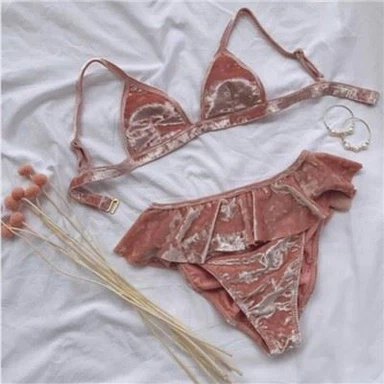
How to Identify the Knit Fabric and Woven Fabric?
Nov 22, 2023
Fabric can come from various materials, including linen, rayon, spandex, lycra, viscose, and cotton. However, the preparation of almost all fabric falls under two main fabric types: knit or woven. But many people don't know how to distinguish them. Then I will introduce the difference between the two for you.

What Is a Knit Fabric and Woven Fabric?
Knit fabric is a textile that results from interlocking yarn together with long needles. Knit fabric falls into two categories: weft knitting and warp knitting. Weft knitting is a fabric knit in which the loops run back and forth, while warp knitting is a fabric knit in which the loops run up and down. It has a certain degree of elasticity. Swimwear fabrics are all knitted.
Woven fabric is a textile that results from weaving two sets of yarn together. Manufacturers use looms to weave vertical warp threads and horizontal weft threads together to create woven fabric. Upon close inspection, woven fabric resembles a checkerboard of straight interlacing threads going under and over each other in right angles, similar to a woven basket. This type of fabric is strong, crisp, and not easily deformed due to the interlacing of warp and weft.
How to Tell if a Fabric Is Knit or Woven?
Here are a few ways to identify whether a fabric is knit or woven:
- Look at the threads. If you look closely at the fabric, you should see the individual threads that make it up. If the threads appear to have loops, then it’s knit; if the threads have a perpendicular criss-cross pattern, it’s woven.
- Check for stretch. Knit fabrics will have much more stretch than woven fabrics. Try to stretch the fabric both lengthwise and widthwise; if it stretches, it’s likely a knit, whereas if it resists, it’s likely woven.
- Do the wrinkle test. Squeeze a little bit of the fabric in the palm of your hand. A knit fabric will spring back quickly into shape with few wrinkles; a woven fabric will retain the wrinkles and often remain slightly crumpled.